Field Note · 2 September 2026
AI Builders in Amsterdam: Communities, Events and Where to Start
A practical guide to finding the right kind of AI builder event in Amsterdam—from open mics and workshops to buildathons and the annual conference.
- Filed
- 2 September 2026
- Author
- Dima Abramov
- Reading time
- 3 min
- Topics
- Amsterdam · Community · AI Builders · Events
- Share
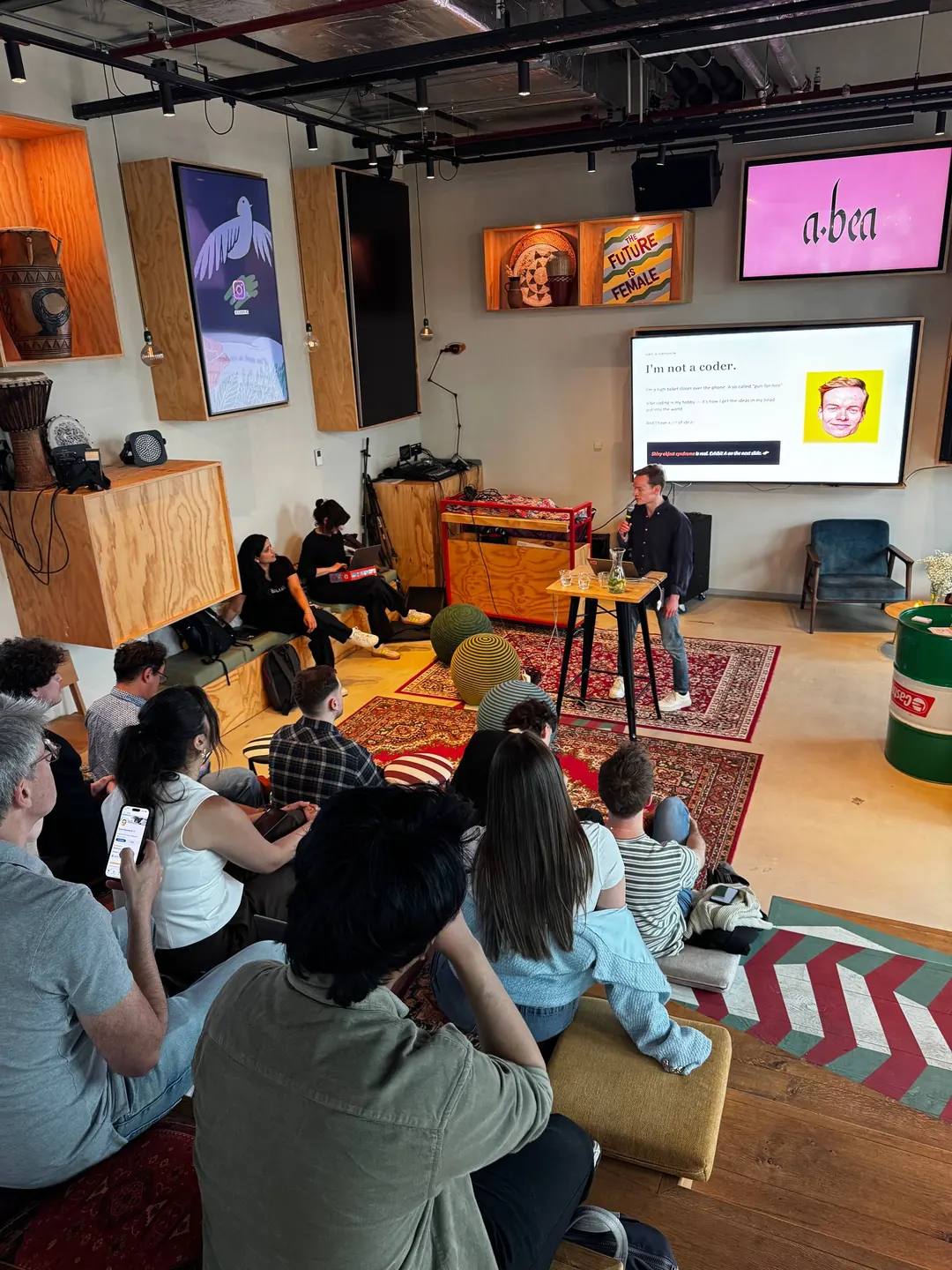
Amsterdam’s AI builder scene makes more sense when you stop treating every gathering as the same kind of event. Some rooms are for meeting peers. Some are for learning a tool. Some are for showing unfinished work. Others are designed to help a team build something under pressure.
I help run this community because builders need different rooms at different moments. Here is how I would choose.
If you want to meet people: start with the community calendar
The lowest-friction entry point is a community event where you can listen, ask a question and meet people who are also figuring things out. You do not need a startup, a polished demo or a technical title.
See the CraftingProduct events calendar on Luma for upcoming gatherings, or join the Amsterdam Vibe Coding Meetup.
If you have something half-built: choose an open mic or demo night
An open mic is useful when the work is real but not finished. The room can react to the problem, the interaction and the rough edges without expecting a launch performance.
Our Vibe Coding Open Mic showed why unfinished work often creates the most useful conversation. Demo nights add a little more structure but keep the emphasis on showing rather than presenting.
If you need a capability: choose a hands-on workshop
A workshop should give you a procedure you can repeat. The best fit is a focused question: how to move from a prompt to a reliable build, how to instrument a product, how to work with agents, or how to turn a messy workflow into a test.
Bring a laptop and, where the format allows it, bring a problem from your own work. You will learn more from recovering when something fails than from watching a perfect demo.
If your team needs momentum: choose a buildathon
A buildathon is designed around an output. Teams work from a brief, make decisions, build, test and show what happened. It is a better format than general training when the organisation needs examples, internal champions and a concrete next step.
Read Hackathon vs Buildathon if you are choosing between formats.
If you want the wider picture: come to VibeConf
VibeConf brings the wider builder community together around product craft, AI-assisted creation and the people changing how software gets made. It is the place for a broader mix of talks, working sessions, demonstrations and new connections.
The VibeConf community record shows past events and the people and formats that led to the conference.
A short history of the rooms
Vibe coding workshops created an accessible place to build together.
Tool-focused sessions with Lovable, Miro and Amplitude connected making to real product practice.
Student and university buildathons gave larger teams a shared deadline and visible outcomes.
Open mics and demo nights gave unfinished work a stage.
VibeConf grew from that community history rather than appearing as a standalone conference.
How to choose your first event
Choose a meetup when you want people and perspective.
Choose an open mic when you need feedback on work in progress.
Choose a workshop when you need a repeatable skill.
Choose a buildathon when a team needs a working outcome.
Choose VibeConf when you want the wider field in one place.
If you are unsure, pick the smallest room that helps you take the next action. The point is not to attend everything. It is to meet people, make something and return with a clearer question.