Field Note · 6 July 2025
Amsterdam Co-VibeCoding Meetup v0: Building, Connecting, and Reflecting
What started as evening experiments with AI tools like Lovable and Replit turned into something bigger: Amsterdam's Co-VibeCoding meetup. My side project to bring curious builders together taught me that small groups create space for depth, and the right people always find their way to the right moments.
- Filed
- 6 July 2025
- Author
- Dmitrii Abramov
- Reading time
- 4 min
- Share
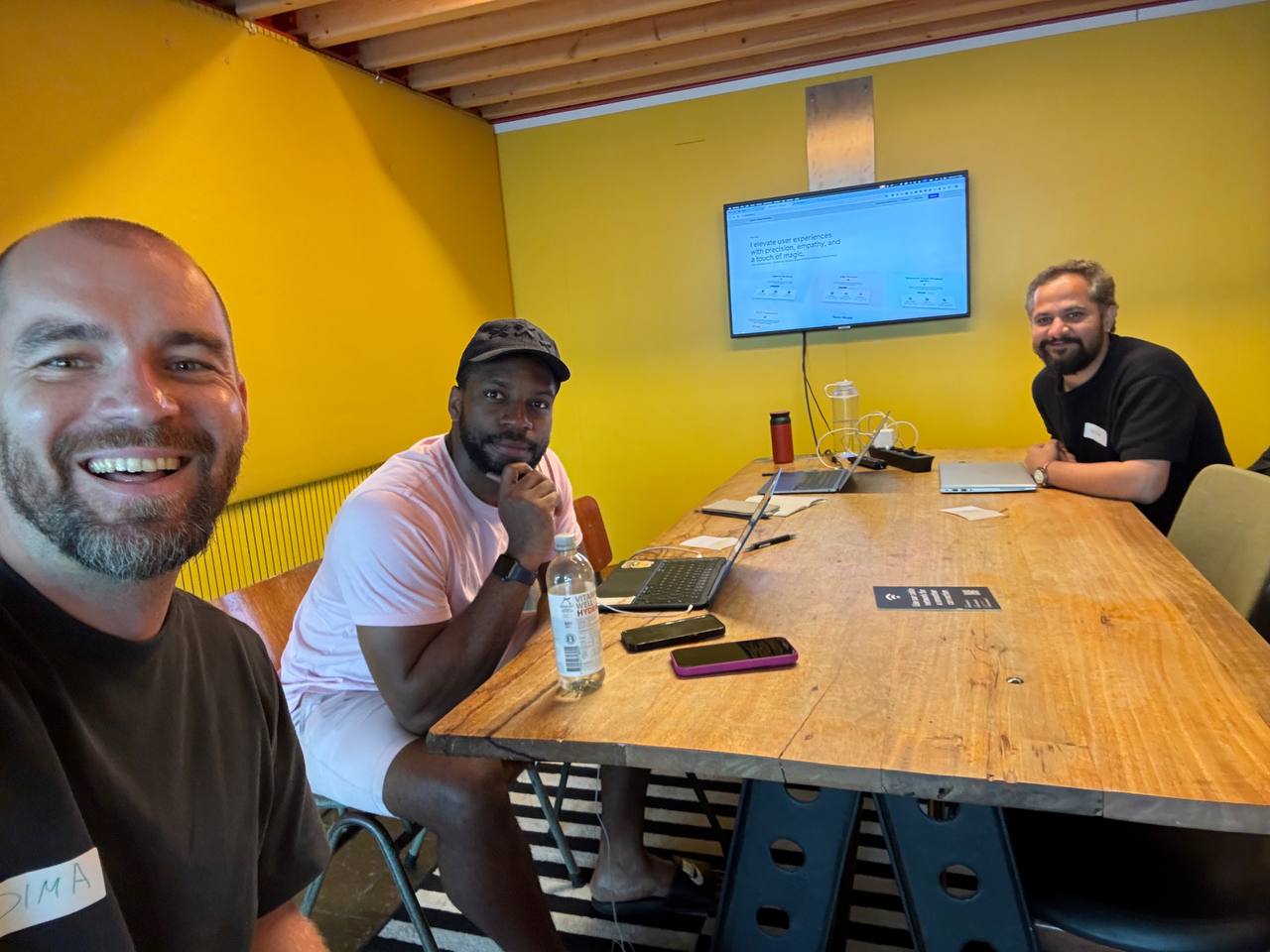
Yesterday, I organised something I'd been thinking about for months: a co-vibecoding meetup in Amsterdam. The idea was simple - get product creators together to build, experiment, and connect over shared curiosity about AI tools and rapid prototyping.
Five people registered. Two showed up.
We built anyway.
Why This Mattered to Me
After 10 years in product management, from TeleCom automation to Atlassian consulting to medtech e-commerce, I've been feeling the weight of routine.
I started tinkering with AI tools like Lovable, Replit, v0 and bolt.new in my evenings - not for work, just pure curiosity. Building random things that made me smile. But here's what hit me: creating in isolation gets old fast. My best sessions were always when I could turn to someone and say "what if we tried this?"
So I decided to test something. What if I created a space where product people and curious builders could work side by side? Not a hackathon with artificial deadlines. Not a workshop with lectures. Just... people building things together.
There's something shifting right now. AI tools and no-code platforms are emerging in ways that feel significant. For the first time, having an idea doesn't require finding an engineering team or learning to code from scratch.
But the tools are only half the story. The real magic happens when curious people gather in the same room, when experimentation becomes social instead of solitary.
Small gatherings like this - even if only a handful of people show up - are how we figure out what the future of building actually looks like.
What Actually Happened
Despite the small turnout, the three of us settled into a rhythm surprisingly quickly. We started with introductions - backgrounds, current projects, what we hoped to build or explore. Then we dove in.
One person worked on a personal website and portfolio. As someone transitioning careers, they wanted to showcase their thinking and approach visually. We talked about how product portfolios are becoming essential for PMs, not just designers - a way to demonstrate impact and thought process in a crowded market.
Another person built a real-time crypto stablecoin movement tracker with a betting dashboard. They'd been curious about combining financial data with gamification, and this was their chance to experiment without corporate constraints.
I worked on refining some existing projects while facilitating conversations about tools, approaches, and the inevitable frustrations that come with AI-assisted building.
What I Learned
Small groups feel awkward at first, but they create space for depth. With just three people, we couldn't hide behind small talk or networking scripts. We had to engage genuinely.
Preparation matters more than I expected. The people who built the most came with clear problems to solve or ideas to explore. AI tools like Replit and Lovable are powerful, but they work best when you can articulate what you want to achieve.
Prompt engineering is still an art. We spent significant time discussing how the quality of your prompts dramatically affects outcomes. It's not just about knowing the tools - it's about knowing how to communicate with them effectively.
Building together beats building alone, even with tiny groups. The accountability, the casual problem-solving, the shared moments of breakthrough - all of this happened naturally when we worked in the same space with similar energy.
What's Next
I'm planning the next session with some adjustments:
Better promotion across multiple platforms - LinkedIn, Meetup. The Amsterdam tech scene is vibrant, but I need to reach more of it.
Clearer expectations about coming prepared with a project idea or problem to explore. Not everyone needs to be a coding expert, but having direction helps.
Symbolic paid tickets to increase commitment. Free events are easy to skip when something else comes up.
The Meta-Learning
The people who showed up were exactly the right people for that moment. We built things, shared ideas, and created the kind of collaborative energy I'd been missing. That's worth celebrating, regardless of the numbers.
If you're in Amsterdam and interested in joining the next vibe-coding session, or if you're thinking about organising something similar in your city, I'd love to hear from you. Building is more fun together - let's prove it.