Field Note · 2 September 2026
More Agency, Less Isolation: How the Amsterdam Vibe-Coding Community Started
AI made it possible to do more alone. The community began because doing everything for the first time alone was not the future I wanted.
- Filed
- 2 September 2026
- Author
- Dima Abramov
- Reading time
- 6 min
- Topics
- Community · Amsterdam · AI Builders · Origin Story
- Share
AI gave me more agency than any change in my job title ever had.
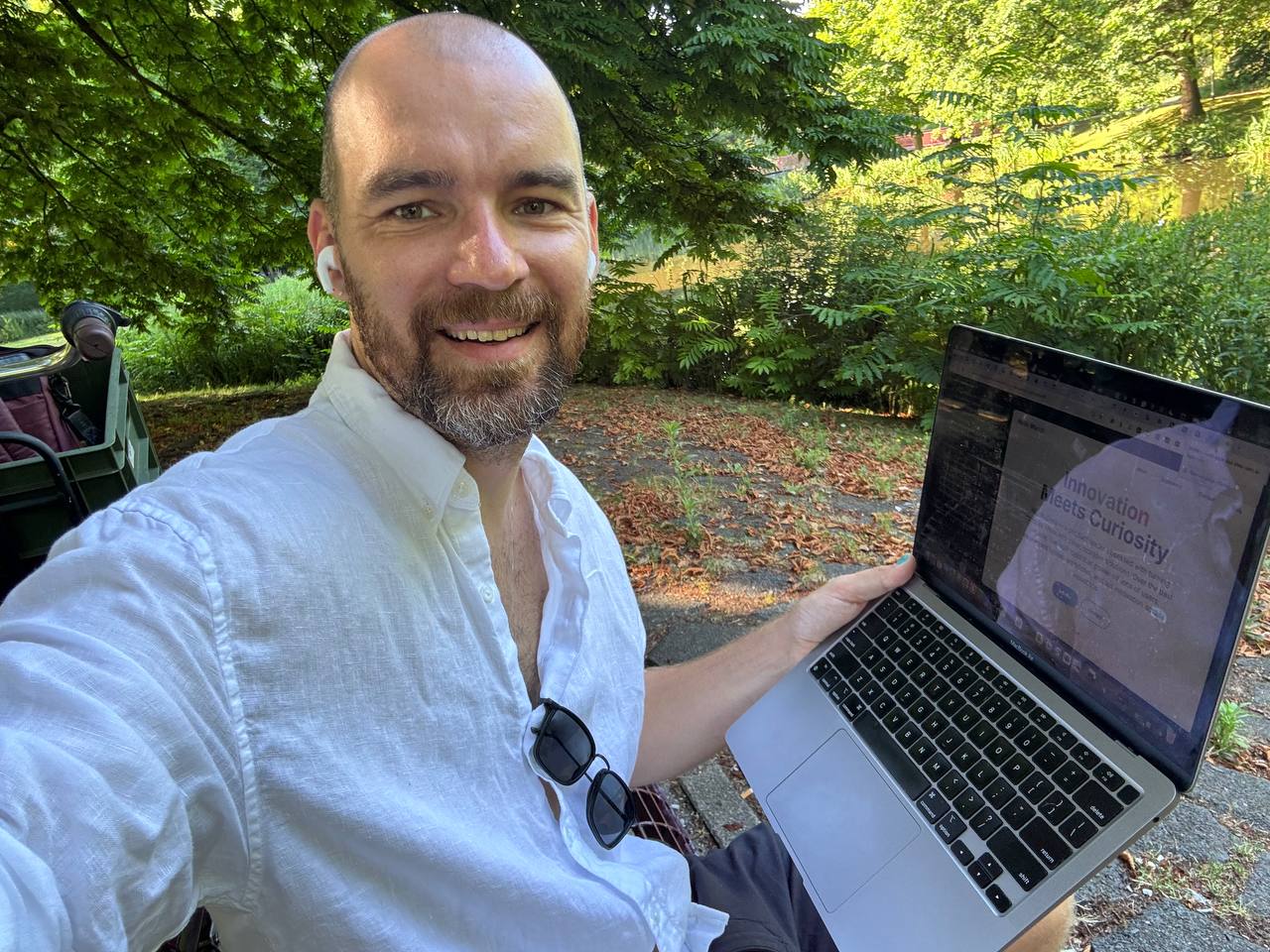
I could research, prototype, write, design and ship without waiting for another department to become available. Problems that once required a handoff became things I could explore before lunch.
It was empowering. It was also lonely.
Doing more alone is not the same as working better
When you cross the boundary of your role, there is no familiar standard telling you whether the work is good.
I was constantly doing things for the first time. Building interfaces. Connecting systems. Running experiments. Creating events around a practice that did not yet have stable language.
The tools made the work possible. They did not provide peers.
That uncertainty can feel personal. You assume everybody else knows the correct workflow, the correct prompt or the point at which a prototype becomes software. Usually they are making decisions with the same incomplete map.
I wanted to meet those people.
The first events were an excuse to build beside each other
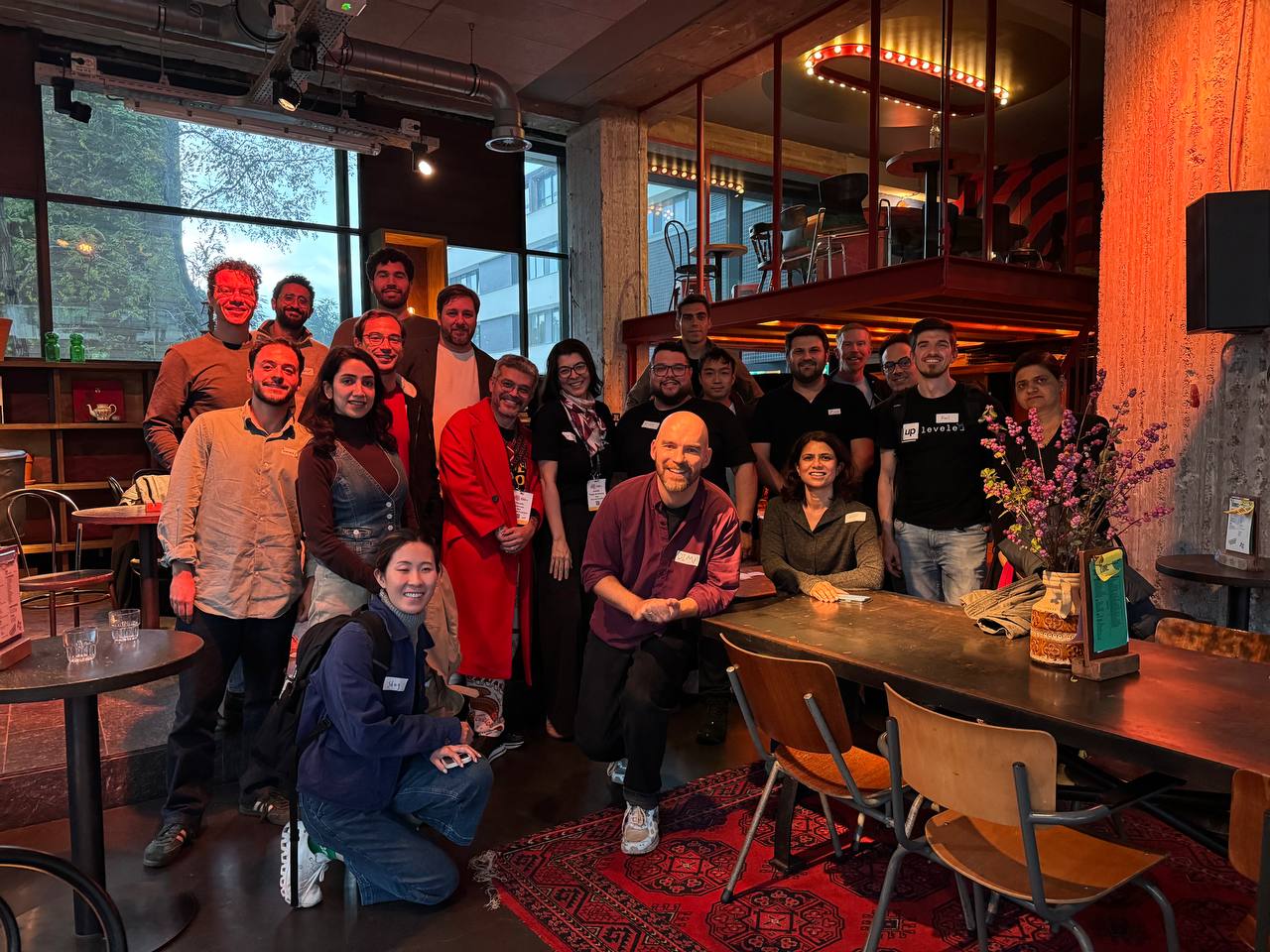
Vibe Coding Amsterdam began in the summer of 2025 as a small series for product people, designers, founders and curious builders.
The premise was deliberately practical. Bring an idea, open the tool and make something. Show what happened. Ask for help. Share the part that broke.
I was not trying to build an audience around expertise. I was trying to create a room where uncertainty could become shared learning.
That difference shaped the community. The useful status did not come from having the most followers or knowing every feature. It came from helping somebody recover when their build stopped making sense.
The community grew around work, not content
We ran workshops, build nights, demonstrations and conversations. The formats changed, but the basic contract stayed stable: people should leave with more agency than they arrived with.
Sometimes that meant a working prototype. Sometimes it meant seeing another builder fail in exactly the same place. Sometimes it meant meeting the person who could help continue the project.
The community was not only a distribution channel for events. It became part of the method.
A room of peers gives a builder things an AI assistant cannot reliably provide:
A comparison point for what good looks like in a real situation.
Social permission to try work outside a formal role.
Context about which constraints matter in practice.
Collaborators who bring a different discipline or lived experience.
A reason to finish enough of the product to show another person.
More agency changed who could be a builder
The early rooms included people who would not have described themselves as technical.
They knew customers, operations, communities, growth or design. They had problems close to the work and had learned to wait for a delivery system to notice them.
AI building moved the first step closer. A product manager could make the flow tangible. A founder could test a service. A community organiser could build the registration and follow-up instead of stitching together another spreadsheet.
This did not make engineering optional. It made product constraints visible to more people.
Once someone has struggled with authentication, data structure or an API, their conversation with an engineer changes. The handoff becomes more informed because the problem is no longer abstract.
The community also changed the product
When people build alone, they often optimise for their own interpretation of the problem.
A community brings the disagreement earlier. Someone asks why the product needs that field. Another notices the language assumes too much. A third points out that the workflow is unsafe with real customer data.
That friction improves the build.
The goal is not consensus. It is exposure to enough perspectives that the product earns its next decision.
From a summer series to a wider record
By the end of 2025, the series had grown into regular events with builders showing products, workflows and businesses. One year of community work expanded into workshops, buildathons, university programmes and VibeConf.
The scale matters less to me than the continuity.
Somebody attends an evening, builds for the first time, returns with a stronger version and eventually helps the person beside them. The community becomes self-reinforcing when participants are not treated as an audience.
That is why I prefer “connections” to inflated claims about reach. The meaningful unit is not a registration. It is a relationship that makes more work possible.
What I learned about building a useful community
Five principles survived every format:
Put working sessions beside talks. Inspiration needs somewhere to go.
Make unfinished work welcome. Polish should not be the entry fee.
Invite different disciplines. A tool monoculture produces predictable products.
Give people a reason to return with progress.
Keep the organisers inside the work. Community loses credibility when the stage and the room live in separate worlds.
The hardest part is resisting the pressure to turn every gathering into a bigger event. Intimacy is not a failure of scale. Some learning only happens when the room is small enough for people to admit what they do not know.
What comes next
The community now has a public history and a clearer front door. VibeConf holds the wider record of events and collaborators. The CraftingProduct calendar points to the next places people can join.
But the purpose remains personal.
I want people building at the edge of their roles to feel less alone. I want a first-time builder to meet somebody who treats their idea seriously. I want experienced builders to show the trade-offs hidden behind the launch.
AI will keep increasing what one person can do. We should be equally ambitious about the spaces where those people can learn together.
Read the community history and past events or discover the next CraftingProduct events. The earlier field notes—Summer of Vibecoding and Building Together—show the community while it was still taking shape.
If you want to create more agency inside your own team, see our workshops and buildathons. Bring a real problem and the people who live with it.